In-Between

After two and a half weeks I am back on U.S. soil and trying desperately to make a re-entry into ‘normal’ life……whatever that is. I have to admit that my mind wanders and I find myself reliving the sweetness and kindness of the people of Scotland. From beginning to end my experience was one of gentleness, hospitality, welcome, and awe. It seemed each person I met went out of their way to be helpful, to assist me in finding my way. And my experience of the landscape from the Lowlands to the Highlands to the Islands was one of beauty and spectacle that was often too immense to take in. So, while my body is here, for the moment I am living in two worlds.

So it was with laughter that I found myself driving into the office yesterday flanked by two cars; one with a bumper sticker that read:Tree-Hugging Dirt Worshiper; the other: My boss is a Jewish Carpenter. Of course, the tree-hugger was driving a Prius and the employee of the Carpenter, a Chevrolet truck. I laughed out loud. I laughed because, in some ways, my experience in Scotland, particularly at Iona Abbey, was that the community there embodied both these statements. As a community of people who have worshiped in this place for centuries, they have done so under the banner that they are people of Creation, gifted by the beauty and rhythm of the seasons, grounded in the earth beneath their feet.  In fact, they say there are two sacred texts: the Book of scripture and the Book of Creation. They are also deeply grounded in what it means to be people who fashion a life after the example of Jesus, the Carpenter. The liturgy we experienced was rich with images of sun, rain, soil, wind, sea. It was also full of challenges to be people of love, justice and service, prayer and grace.

So many times, at least for me, I have had the sense that somehow the church has told us we had to choose one or the other, soil or Shepherd. And that has always felt false to me, something I could not fully do. On Iona, it was with a sense of ‘arriving’ that I was swept up in the winds and force of the meeting of Prius and Chevrolet. While this theological perspective is one I believe is found in the worship in which I am most often present,somehow knowing that this is the way of naming the movement of the Holy over the centuries in this place, filled me with such joy, such a sense of coming home to myself, such an affirmation of faith.

Over the next few days and weeks, I will slowly arrive back here in the place that is truly home. But for now I am in-between. The thread that I hold in my hand, however, connects me to that place where I was reminded that I don’t have to choose. It was, indeed, an affirmation that I could have it all: tree, soil, wind, sea……Creator, Teacher,Healer,Light of the World. And that the Holy’s presence cannot be confined.

“Now may God who gives seed to the sower and corn to the reaper, give to us all that is needed to produce a good harvest. May God make us fertile in faith, love and goodness, and take us out with joy, and lead us on in peace, as signs of the fruitfulness of heaven. Amen” ~ The Iona Community
On Iona

*****Well, I am back from my 2 1/2 weeks in Scotland. My body is here but I find my inner clock has not quite caught up. The post below never made it through all the many difficulties I had accessing the Internet. So I offer it now knowing that the Spirit works in mysterious ways. Perhaps I was meant to be present to the moments with which I was gifted and not searching for internet hotspots.

On Iona

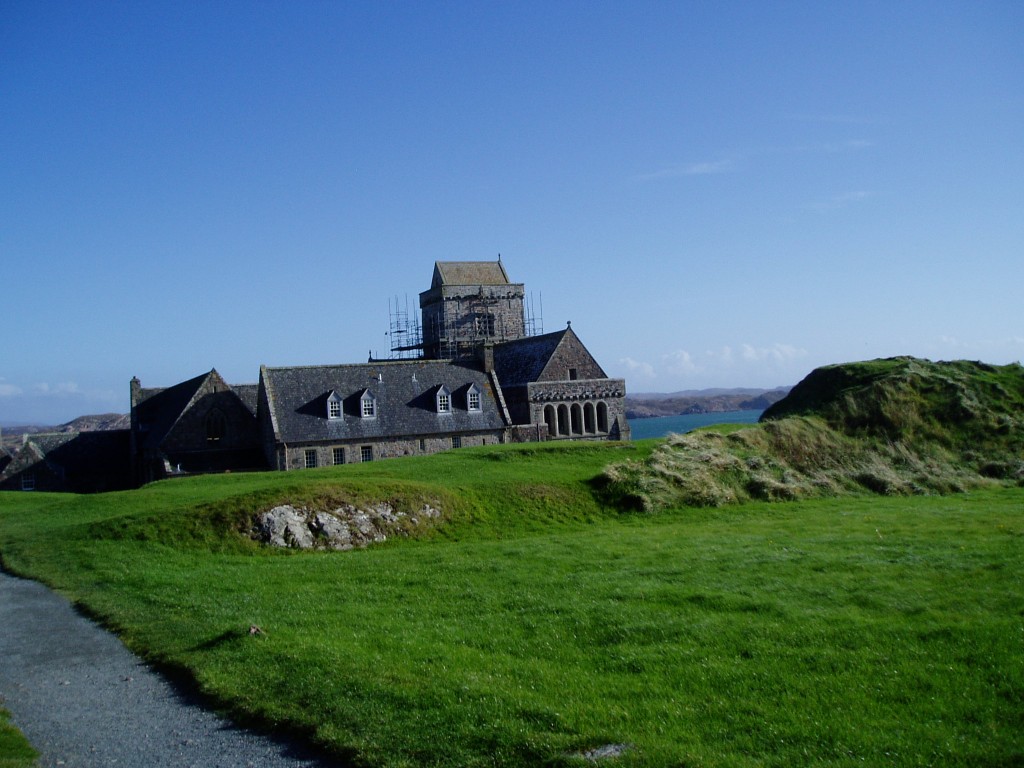
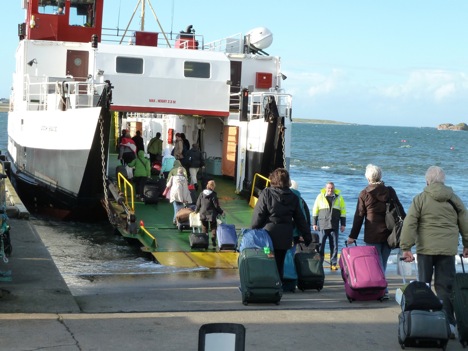
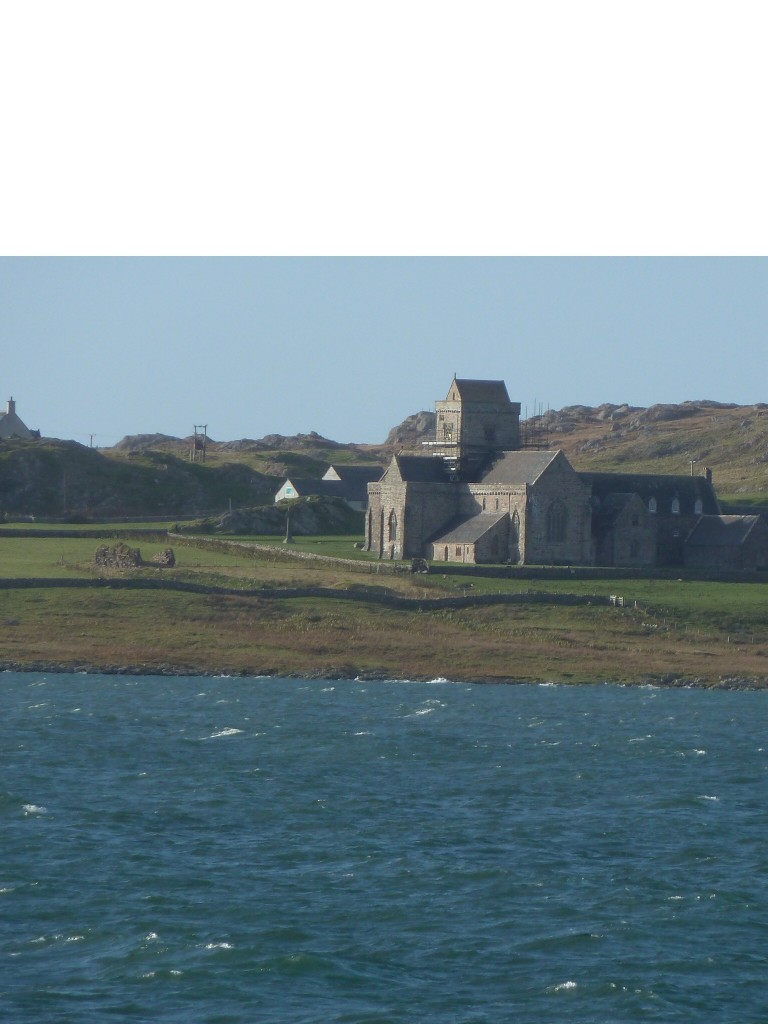
We arrived late afternoon by ferry to the beautiful island of Iona. As we came across the short distance, the waters were rough and rocky but we could see Iona Abbey looming on the shore. We had finally arrived! We made our way to the St. Columba Hotel where we would be staying. From the moment we stepped on the island, we began to experience the hospitality and welcome which is one of the signature qualities of the Iona Community. After an amazing dinner, we quickly made our way to the Abbey for evening worship. The community, an ecumenical gathering of all ages, lives and works in the centuries old abbey. They also worship twice a day, short services of music,prayer and scripture. It is an amazing experience to sing in this very old space. I have to say we did sound beautiful! Most of us were taken with the number of young adults in attendance, particularly in worship leadership. It was a joy.

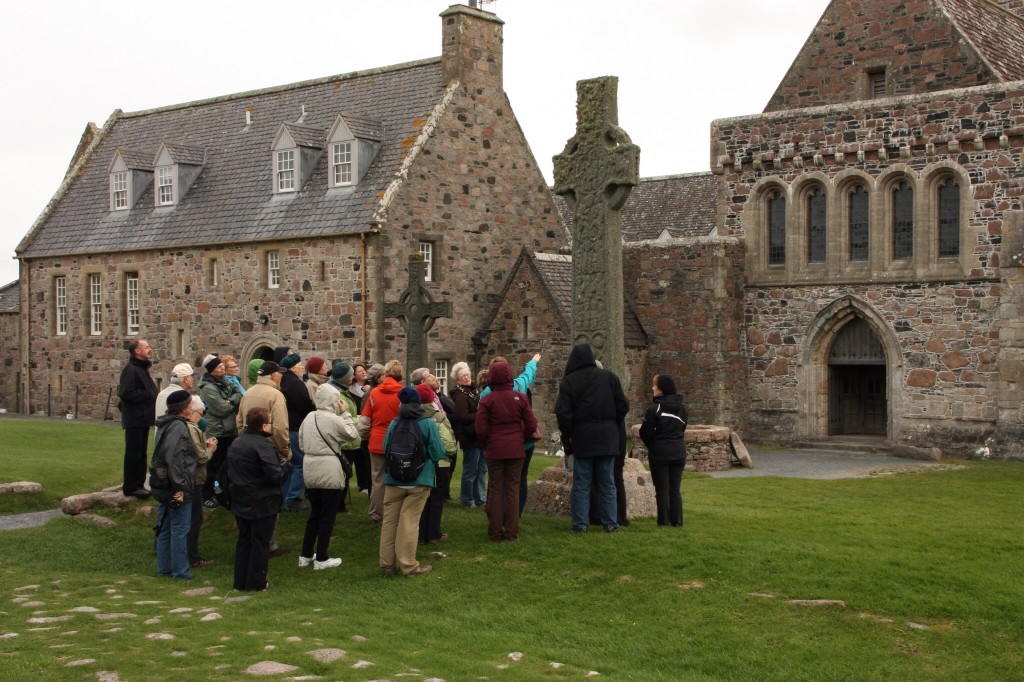
This morning we awoke to a sunny, dry morning, something that I think was a total surprise to us. We had all prepared ourselves for the idea that it would be raining all the time.The wind was quite strong, however, when our Iona guide, Janna arrived to take us on a tour of the ruins,the abbey and to give a general overview of history plus a peek into what it is like to live on this island year round. Since she is the mother of two young children, it was fascinating to hear about the two ferry, three hour one way trip to go grocery shopping! While most people do have gardens (in fact our hotel has its own garden), there is still the need to get other staples. Janna will also lead us tomorrow on the three hour pilgrim’s walk that follows the footsteps of St. Columba.

The abbey at Iona had it’s birth in 563 when Columba and his monks established a monastery on this tiny island. From that time on pilgrims have come to this place for retreat, to serve, to worship and to be in community. Over the years the Abbey had deteriorated from wear, weather and neglect. But the sacred nature of the place continued to be the burial place of kings and those who had visited and found a spiritual home here. In 1938 the Reverend George MacLeod helped refurbish and re-establish life at Abbey church into an ecumenical community that continues to welcome pilgrims and seekers from around the world. We found the hospitality to be nothing short of remarkable.

In the afternoon, we explored on our own the small village that rests along the shore and walked the beaches that are a stone collectors dream. Up and down the shore are the gorgeous green stones for which Iona is famous. There is much to be found in the artist colony shops created by local craftspeople and artists. The Iona Community also has a shop that sells the many worship resources and books written by the leaders past and present. George McCleod. John Bell. J. Philip Newell.

Last night’s worship in the Abbey was an Agape meal. We arrived to find the sanctuary bathed in candlelight and a several long tables running down the center covered in white tablecloths. Plates lined the tables with what looked like loaves of flatbread. As we sang and prayed the leader then instructed us to pass the plates, offering it to one another along with the peace of Christ. As I took the bread, I realized it was Scottish shortbread. There was a powerful sense of unity in the room. People from all over the world, worshipping around a common table, sharing a simple common bread. The candlelight washed over the faces of those present,still bundled in their coats to ward off the chill of the stone building. There was an angelic glow that settled on their faces.

We prayed together this prayer: May the grace of the love of the stars be ours. May the grace of the love of the wind be ours. May the grace of the love of the waters be ours. In the name of the Word of all life.

And so it was…….

Pilgrim’s Walk

Our second day on Iona began with worship at the Abbey with all those who have traveled to the island on pilgrimage of their own. Worship was led by the staff who rare in residence at the community. As worship happens every day at 9:00 a.m. and 9:00 p.m. there is a rhythm that begins to form your day, even after only a short while. That rhythm is one that is not hurried but has intention. After breakfast,there is worship which grounds you for the work or play of the day. After dinner, there is worship for giving thanks for the day and setting the pace of your heart and mind for rest. It was amazing how quickly most of us fell into this pattern, this practice.

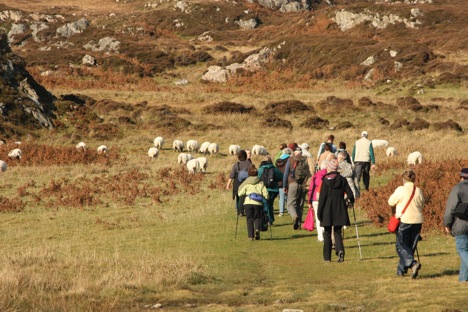
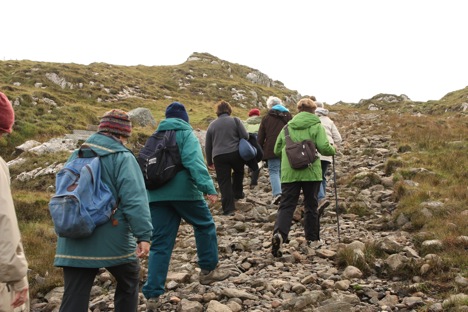
The main event of our day was the pilgrimage around the island, stopping at points of interest, places where important act happened. Where St. Columba first landed with his band of refugee monks. The Hill of Angels where a man was said to be visited by angels. St. Columba beach where the particular green stones known to Iona can be found.Martyrs Bay, where 68 monks were slaughtered by Norse invaders. The pilgrimage walk took us over paved roads, farm fields, a golf course. Up rocky hills that still had blooming purple heather on them, through muddy, boggy fields and finally onto the beach covered by stones of an enormous variety of colors. It was a stone seeker’s heaven. This terrain was not for the faint of heart but our guide, Jana McCellan, had reminded us that on pilgrimage you travel at the pace of your slowest companion. This was a good reminder for all of us as a wise way to walk in the world. I believe we all found great gifts and challenges on this trek.

One of the true gifts of this experience was that our guide, Jana, had created  meditative stops along the way for us to reflect, not only on the history of the places our feet trod, but on what standing in these places might mean for our life, here, now.As we stood at the only crossroads that exists on the island, she asked us to consider the crossroads we might be experiencing or see others experiencing. It was a powerful moment, a powerful thing to consider.

Those who had chosen to do other things during the nearly six hours we hiked, created their own pilgrimage around the island, moving at their own pace, creating then solitude and alone time in this place of peace and quiet. When we came together in the evening, we told of our travels, of what we had encountered, not only in the landscape, but in the soil of our own souls.

Worship at the Abbey last night was a contemplative service. Long periods of silence were held together by the sung response: Be still and know that I am God…….As we sat in the candlelight, the stones and warmth of the hospitality that has been present here for centuries, created a nest of safety for all we had experienced. Outside,the winds which seem to be ever present, whistled and whirled seeming to make a circle around the building. We could not feel its chill but we knew its presence. Many of us wore the windburned look of the day on our faces. It seemed a fitting metaphor for the walk with the Spirit. As I looked around there was an amazing look of peace and contentment on all the faces we have come to know as fellow pilgrims.

A short aside, the weather has been absolutely fantastic. Our guide, Bill, said yesterdays that his wife is not going to believe that he got sunburned on Iona! Many are crediting us with bringing the weather.

Given that most Minnesotans are often said to bring weather no one wants, we’ll take it!

Mist Filled Path

We had an early morning as we set out for the journey from the Lowlands to the Highlands of Scotland on our way to the city of Oban. From there we cross by ferry to the Isle of Mull. This we will do by motor coach but then we will take a person only ferry to Iona as the island is so small it limits the number of vehicles allowed on the island. For the last several days, our guide Bill and driver Robert have encouraged us to pray for good weather today so our crossings will be easy. We awoke to rain but as we left the Lowlands, we could see that the moors were still ringed in mist but beyond there was the promise of blue sky. Not being one who takes much to the idea that prayers for weather carry much power, I will simply hold the thought that we are very blessed for the day we’ve been given while remembering that everywhere we go people tell us that ‘the weather in Scotland can change in an instant’. As people of Minnesota, we understand.

In a book several of us have read in preparation for this journey, The Mist-Filled Path: Celtic Wisdom for Exiles, Wanderers & Seekers, author Frank MacEowen writes: ‘Mist is beautiful natural power. This old spirit is an ambassador of the in-between. Not entirely water, not entirely air. The mist is a unique dancing marriage of the two elements. In effect, it is a shape-shifting element.’ The experience of moving from Lowlands to  Highlands, shrouded in the mist was a wonderful reminder that, as pilgrims, we are in an in-between place. We have left the vibrancy of the city and are going to a place of solitude, simplicity and prayer.

On our crossing from Oban to the isle of Mull, the seas were a bit choppy and the rain picked up. But what a sight we received as our reward. First one rainbow appeared from the shore reaching heavenward toward the heather covered hills. Then as we left the ferry, an enormous, brilliant rainbow arced as if it was born from the water and returned to the water. And then before our very eyes, it doubled itself. To be blessed by a double rainbow. What a gift!

Leaving Mull, we marveled at our coach driver’s ability to maneuver the single lane roads, pulling over to share the road with other cars and coaches. There a few seat gripping experiences as we zoomed through rain and wind, fogging the windows of the coach with our breath. But by the time we completed our hour’s drive, the rain had stopped, the sun had come out and the skies had turned a brilliant blue. The crossing by ferry was short and a ‘wee bit’ rocky to quote those we have met in our days here.

As we stood on the shores of this tiny island, where history claims the beginning of Christianity in Scotland began, was amazing. We gathered at the end of the jetty where our boat had delivered us safe and sound. Like so many pilgrims throughout the centuries, we felt blessed to be on dry, safe ground after days on the road. Unlike the majority of those first pilgrims, we had ridden in privilege and relative safety. I pray this truth was not lost on any of us. But nonetheless we felt relief and anticipation of what our journey will be here. We sang and honored our arrival with these words of John O’Donohue: ” In the out-of-the way places of the heart, Where your thoughts never think to wander, This beginning has been quietly forming, Waiting until you were ready to emerge.”

Indeed, the emerging of what this ancient holy place has to offer each of us is yet to emerge. May the Holy One keep us open,listening and present to the path as it unfolds.

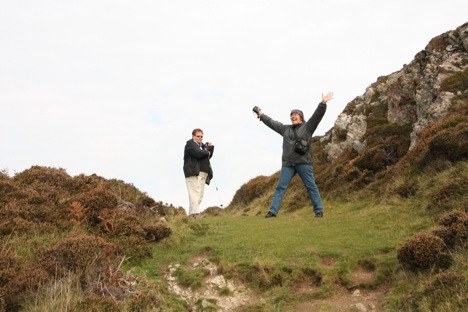
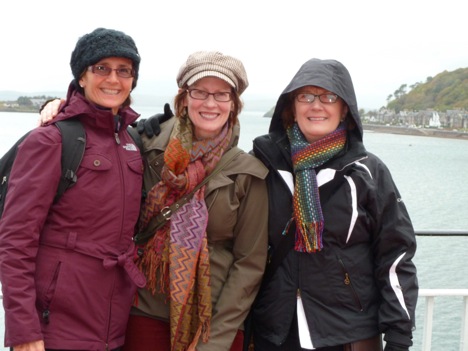
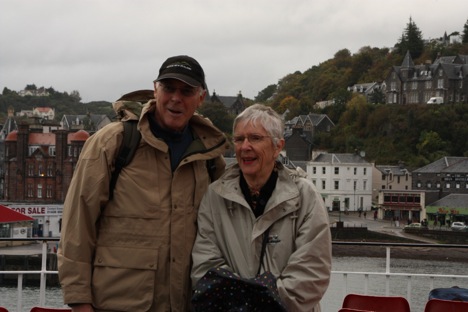
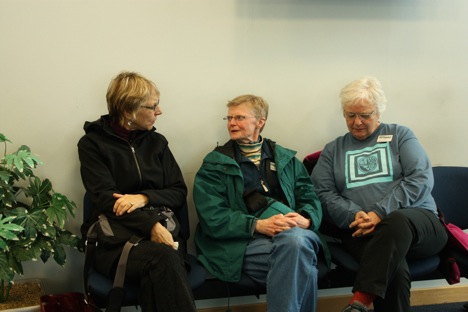
*****Many of you have mentioned that you would like to see pictures of your friends and loved ones who have made this pilgrimage. I’ve included some today. Enjoy!

Solved by Walking

There is a Latin saying….solvitur ambulando….which translated means ‘solved by walking’. Our pilgrim band might have had this tattooed on our feet today. It was a free day of sorts. We started our morning with prayer accompanied by the Native American flute. Funny how it sounded almost Scottish! The sound grounded us in the music of those who have always lived near and honored Creation much as the Celts did. It was a good way to start our day of walking.

Some of us boarded our motor coach for a short ride to Rosslyn Chapel, the 600 year old chapel made famous to us in Dan Brown’s The DaVinci Code. This tiny, unusual feat of architecture is nestled in the green hills outside Edinburgh. This was somewhat of a surprise to those of us who read the book because it seems as if the characters twist and turn through steep terrain to arrive at this holy place. Once at the chapel,we learned many ways in which fiction and reality did not quite come together. But there was no doubting that we were in a very sacred place that had held, and still holds, great power. We have already been confronted over and over with how short our American view of history really is. Rosslyn Chapel reinforced this experience. How do you even get your head around the events that have taken place in a building, and not even a large building, over such a long time? The over turning of Roman Catholicism, the Reformation, Cromwell using the building as a stable, years of water dripping on sandstone walls & columns, misplaced wisdom of trying to preserve the intricately carved stone by painting it with cement. Only to have its life renewed by the fanciful tale told by an author who had never really been there. Fascinating.

While some were traipsing out of the city, others took a walking tour with our now beloved guide, Bill Rennie. Not only is Bill an excellent herder of cats, he is kind, incredibly knowledgable and a true gentleman. Here in Edinburgh, his hometown, we have also seen the passion with which he loves his home. What a joy it has been to see his eyes light up and his face become animated as he shows us about all the places he must have known since he was a boy. The group that spent time on a walking tour with Bill saw the many gardens still in full bloom here in the city. They also walked from one end of the Royal Mile to the other taking in the Writer’s Museum, honoring Robert Louis Stevenson and Robert Burns, down Prince’s Street to the Scottish Parliament , being able to watch the action complete with those amazing wigs. They walked through the many Closes(little alleyways that connect streets and residences), Holyrood Palace, its Abbey, and the many and varied places the country honors its war dead. Walking……

Some climbed, at least in part, the large nonactive volcano toward the place known as Arthur’s Seat. A trek not for the faint of heart.And one pilgrim even made her way to the beginning of Scotland’s favorite sport by traveling to St. Andrews, the home of golf.

Our question this morning as we began prayer together came from a Mary Oliver poem: ‘Tell me, what do you plan to do with your one wild and precious life?’ Our steps may have led us on varied paths but we carried the same question no matter the route. It is a question we awake with every day, whether in Scotland, Minnesota, Iowa, South Dakota, Wisconsin or wherever. It is the question humans grapple with daily and have chosen to grapple with as pilgrims. It is the question that will ground us as we board the ferry early tomorrow morning, headed for Iona.

Stone of Destiny

We awoke to a beautiful, sunny, crisp day in Kelso and boarded our motor coach to Edinburgh which will be our base for two days before heading off to the Island of Iona. Driving through the rolling countryside we saw, once again, the stone fences that create boundaries between farms, helping the sheep and cattle to know where home is. We learned that these fences have no mortar that holds them together. The fence builders simply search for the stones that ‘fit’ well together. They rely on the grooves and curves, the sharp edges and points to create a perfect foundation for one another. It is the same with community, isn’t it? We take the soft and rounded edges of our very selves, the humility of our gifts and build them together with our harder, sharper edges and before you know it, everything fits together in ways that work.

Riding along in our motor coach( we have been told this is not a bus!) we had morning prayer: “At the beginning of this day we seek your blessing. At the rising of the sun we seek your glory. Open our eyes to your presence, O God, that we may glimpse you at the heart of each moment.” Our voices joined as the motor coach rose up and down the road which was sandwiched between lush green fields. Off in the distance we witnessed a gleaming wind farm, white turbines spinning the invisible into energy. Spirit work.

We arrived at Edinburgh Castle and began to make the steps millions have traveled before. Over the cobblestones, our feet made their way past the cannons that once protected the city against invaders toward the exhibits of the Crown Jewels, the Stone of Destiny and into St. Margaret’s Chapel. We took in the prisoner of war museum making our way through dungeon-like tunnels that smelled musty, squinting our eyes against the dim light to see beds and hammocks piled on top of one another, their only
padding the straw that lay beneath feather tick, thin mattresses. It was a dismal sight as we thought of how people have the ability to treat one another. But all these experiences painted a picture of the history of the humans who have called this place home.

From the Castle we made our way to St. Gile’s Church, a lovely little cathedral that sits just down the road on what is known as the Royal Mile. St. Gile’s is filled with amazing stained glass windows, one that is dedicated to Scotland’s most famous poet, Robert Burns. This church has seen many iterations of worshiping life and seems to be undergoing yet another. The entrance created hundreds of years ago now opens into a blue, glass automatic sliding door that gives the feeling of walking through clouds. Once inside, the stained glass dominates the traditional space. A large statue of John Knox, possibly the most important Scottish theologian and founder of the Presbyterian Church, stands in prominence. But looking around amidst the sanctuary I became aware that the choir stalls had been moved to ring the altar table which now sits prominently in the center of the space. Lovely oak chairs with woven cane seats, a carved Scottish flag on the chair back, have replaced the majority of the pews. The pews that are left have been stained a light green and a brand new organ has been installed on one of the side walls. The organ is stained a deep red. All the seating creates a circular formation focused on the altar table. This configuration brings the community and the clergy into a visually equal footing round the table.

Of course, I do not know if the openness and creativity I observed in the architecture and furnishings translates to the way the community lives out its faith, but I hope so. On a poster near the entrance, there is an explanation of the changes that have been and are being made: “These stones could be clean again, and draw tomorrow’s people to seek and find a faith for celebrating good things, and find comfort in times of difficulty.” As I read these words it was clear to me that most churches are struggling to do much of the same work. Most in our group could certainly relate to their quest.

And so at the end of this day, my prayer is for all those who continue to clean the stones,move the furniture so all will feel welcome, and put food on the table at the center of who we are. For those who have continued to do these courageous and humble acts, I offer my gratitude.

In the Steps of Saints

” Sing for God’s saints who have tracked faith’s journey before us,
Who, in our weariness, give us their hope to restore us;
In them we see the new creation to be,
Spirit of love made flesh for us.”

We began our morning on Holy Island, Lindisfarne, by singing these words. Holy and powerful words for an equally holy and powerful experience. As we had our morning prayer, standing in the mist of a Scottish rain, we could all feel the presence of the countless faithful who had prayed in this place for centuries. How does one even process such an experience? I looked around at the faces and could see the myriad of longings, hopes, and anticipations my fellow pilgrims carried into the ruins in which we stood. As we lifted our voices in song, we knew we were joining other voices that had echoed in this place when the walls were intact. As we offered our prayers, we were keenly aware that our voices were joined by the whispers of words lifted by the ancients.

Holy Island sits at the northeast coast of England just south of the Scottish border. The island’s life is governed by the tides. There was a window of time in the morning when the causeway was open and the tides were out. We rose early to make our way onto the island before the tides came in creating an impassible road to Lindisfarne Priory and Lindisfarne Castle and the few houses and shops that make up the small village. While we were busy trekking the land, the moon had done its work to create the tides from the North Sea that engulfed the shore. The Priory was founded in AD 635 and is the home and original burial ground of St. Cuthbert, an important figure in the establishment of Celtic Christianity. The story goes that after his death in AD 687, Cuthbert was buried and his remains were exhumed 11 years later to find that his body was in perfect condition,a sure sign of sanctity. He was the spiritual leader of those who lived their faith on this peaceful, isolated place for years, a place of solitude until it was invaded by Viking raiders in AD 793, a day the locals call ‘the day that changed everything’. The Vikings raided to capture the gold and riches brought by pilgrims as gifts to those at the abbey who had healed the sick and nurtured their spiritual lives. In addition to the valuable material objects, the Vikings also captured many of the people on the island to sell as slaves. One of our pilgrims remarked that while much as changed over the years, much may have sadly stayed the same.

Today’s weather created a movie-like Scottish set: gentle rains, misty roads, sheep standing like statues in the fields, boats bobbing on the water, shore birds flying overhead. There was no magical entrance of bagpipes today, though! Instead we found ourselves more rested, more prepared to be present to the Spirit’s movement in our steps, our path, our journey. Each pilgrim found this in their own way. Some in twos and threes. Others in solitary rain-soaked walking.

In the book, The Art of Pilgrimage, which we read as preparation for this journey, the author offers these words: Imagine your departure as a metamorphosis. Through simple acts of intention and attention, you can transform even a sleepwalking trip into a soulful journey. The first step is to slow down. The next one is to treat everything that comes your way as part of the sacred time that envelops your pilgrimage.

Today the rain provided the slowing down even the most driven among us needed. That slowing down allowed us to see and hear and experience the sacred time that is enveloping our journey. I know this is true. As one of our travelers told me: “Did you notice that when we sang,the birds that sat at the tops of the priory, stopped singing? And then when we prayed, the birds accompanied us in song?”

Yes, I had noticed. And I felt blessed to have shared this sacred noticing with her and the winged ones.

On Holy Ground

After a long night flight and a lay over in Amsterdam, we arrived in Glasgow, Scotland in the late morning. Those of us who had been planning this pilgrimage for more than a year, looked at one another in awed triumph. “We are really here!” Thirty-one people who did not know one another several months ago are now traveling, eating, laughing, praying and becoming community. It is a joyous thing, a holy thing.

After meeting our Scottish guide, Bill, at the airport we headed into the rolling country side to have lunch at Peebles……a sweet little town on the river Tweed. The walk along the river helped liven us up after the long plane journey. The group is beginning to gel and the small groups of travelers who knew one another from other circles are now spending time getting to know new people. A good trait for any pilgrimage, I think. At our first stop we headed out in twos and threes to discover places for lunch and shopping. A pilgrim must ask the locals for advice on where to find food. I received good advice on the cheeses of the local area. I relied on the kindness of strangers as we all did.

As we continued on toward Melrose Abbey, we saw the heather,now reddish brown on the hills, turned from its lavender blue of its August flowering. Fly fishermen lined the river searching for salmon and trout. Pheasants scattered themselves about in the harvested barley fields, their ringed-necks looking like a woman adorned in fine jewelry. The countless fluffy sheep lazed on the hillsides making polka dotted patterns in the rich, green grass. The scene gave new meaning to the word pastoral.

We arrived at Melrose Abbey, a medieval Cistercian stronghold situated in a town of cobblestoned winding streets. As we entered the abbey grounds, the sounds of bagpipes began to wash out of the stone ruins. Really? Really. We had come upon a wedding in this ancient place. I was struck with the power of a new beginning in a place that had known the prayer and work of so many of the faithful over hundreds of years. The wedding party marched out of what remains of the abbey walls. The men in kilts of different family tartans. The bride, resplendent in an ivory gown that shown against the deep green of the grass, the strength of the stone. The women guests wore extravagant hats as only the British can do.

We pilgrims spent time walking the abbey grounds, standing in the places where walls once stood, where both clergy and lay people worked side by side to tell of God’s movement in their lives, in their time. Slowly I observed our little group walk off singly, looking with interest and a sense of presence at the ancient, sacred place to which we had come. Just hours ago, we had been flying high over the Earth, something those who had made their mark in the stone and the soil of this place could never have imagined.

And yet somehow, if we allowed ourselves the presence of mind, the fullness of Spirit, we were connected to the breath, their breath that moves through this holy place. It had become a truly thin place.

Apple of My Eye

For several weeks now I have been passing by a house not far ours on my daily walks and observing a small apple tree in the yard. Like a tomato plant we grew this summer, both plants yielded only one fruit. Our tomato plant grew tall and heavy with leaves but, in the end, had one medium sized tomato that remained green for weeks. Every morning I would check its progress. But it was taking its own good time in coming into its fullness. I referred to it as our Zen tomato plant. The same has been true of this apple tree. It is a small tree that is now heavy with one rather large apple. I have watched it grow larger and larger as the branch bends with the heaviness of its fruit. Each day I have been drawn to its growth, the weight it is exerting on the tiny tree.

As I have observed it, I have thought about all the energy and nutrients that have gone into creating this one apple. I have been fascinated with the singular thrust of this tree. Some might think that the tree is deficient in some way to only produce one offspring. But I have been reminded of the artists, the writers, the farmers, the activists, the parents who have poured all their energy into creating one single, perfect, beautiful thing. While they may go on to create something again at another time, for this day, for this season, there is only the single-minded passion to produce one gift to the world. Unlike the common patterns around them, scatter-shooting ideas and plans, these are the people who can have a vision, hold onto it gently but firmly, and move methodically toward its creation, its fulfillment.  When you are in the presence of such people, it is pure gift. Pure gift to watch the calmness that grips them at some deep place, some Spirit place. Some commitment that allows them to keep their eye on the prize.

This little apple tree has reminded me of the sacrifice of bringing forth something beautiful in the world. Its branches(there are only about three) are pulled and contorted by the heaviness of its progeny. Many parents know this same pull. As does anyone who has labored over a dream. But, oh, the joy that comes from seeing the child, the painting, the project, the apple, come into its fullness. I dare say someone felt the same for each of us at one time. And so I am thankful for the gift of this little tree. For its persistence. For its hard work. For its lessons.

There is a song I learned years ago in the spiritual renewal weekend called Cursillo. It goes something like this: ‘Because you’re the apple of my eye, I’ve set you in a high place. You are my inheritance. You are all I could desire. And I promise to stay with you forever.’

For all the apples of their Creator’s eye, I am filled with awe and gratitude this day. Look around you because they are everywhere. Perhaps an offering of thanks is in order.

****I will be leaving this afternoon for a long awaited pilgrimage to holy places in Scotland. With the cooperation of wireless internet sites I can find, I will be posting on this blog a daily diary of our travels. I hope you can join us in this way as we walk the paths the faithful have walked for hundreds of years.

Hooked

“The wisdom of the humble lifts their heads high, and seats them among the great. The bee is small among flying creatures, but what it produces is the best of sweet things.” Sirach 11:1,3

Yesterday I heard a wonderful report on MPR about a Minnesota woman who received a ‘genius’ grant from the MacArthur foundation. This grant carries a gift of $500,000 for the recipients to continue the study in which they have been engaged. The recipient, Marla Spivak, has spent years studying the honeybee. In the report she was asked how she came to such work. She declared that she had been ‘hooked on bees’ since she was eighteen years old. I laughed out loud in my car. Hooked on bees! I think of what it must have been like to discover your passion so early and to have continued its love throughout your life. And then to have received a coveted award for that same love.

Now, to most people, honeybees may not seem like very important beings. Certainly not worth such a grand prize. But Marla Spivak points out that honeybees pollinate a third of the food supply of fruits and vegetables in the United States. Without their work, our lives will become less healthy. Something to think about, isn’t it? Those little insects that buzz around the flowers and sweet drinks we hold on our decks on sunny days are important to our over all well being. And the truth is, they are not doing well. It seems that with diseases and pesticides and (can you believe this?) less flowers in the world, the honeybees are declining in numbers and in their own ability to do their work. And so the point needs to be made: If the honeybees aren’t doing well, what about we two-leggeds who can sometimes walk about as if we are the center of the universe?

This all made me think about what other beings in our world we might be ignoring or overlooking simply because they seem smaller and, to us,insignificant. I happen to be one of those people that believes that each part of Creation has a purpose. Sometimes, in my limited life experience, in my narrow understanding I don’t always realize this truth. But hearing about the honeybees yesterday gave me a reason to keep my eyes open, to be on alert, lest I think myself more important than I am. It was a good wake up call.

There is a story I have heard more than once about the ways in which the rabbis used to help their students understand the sweetness of the scriptures. They would fill a tray with a thin layer of honey. Then they would have the students write the Hebrew letters in the honey. After the letters had been formed, the students would be instructed to lick the honey off their fingertips. As the sweetness slid off their fingers, onto their tongues and down their throats, the gift of the scriptures literally became a part of the aspiring writers. It is a wonderful image isn’t it?

Perhaps those of us who travel life’s sweet path today, might take a moment to be present to all the small creatures with whom we travel. We might pause and think about what they bring to our lives and how we would be less without them. And then we might say a prayer of gratitude for the ants and worms that plow our garden dirt and the box-elder bugs covering our window screens. For the squirrels busily gathering food for their winter sleep. For the bats which swoop and the mosquitoes that fly. And especially for the honeybee on whom we depend. Even when we don’t know it.

And while we are at it, how about a prayer for the ones who get hooked on these creatures and can bring us to a greater appreciation.